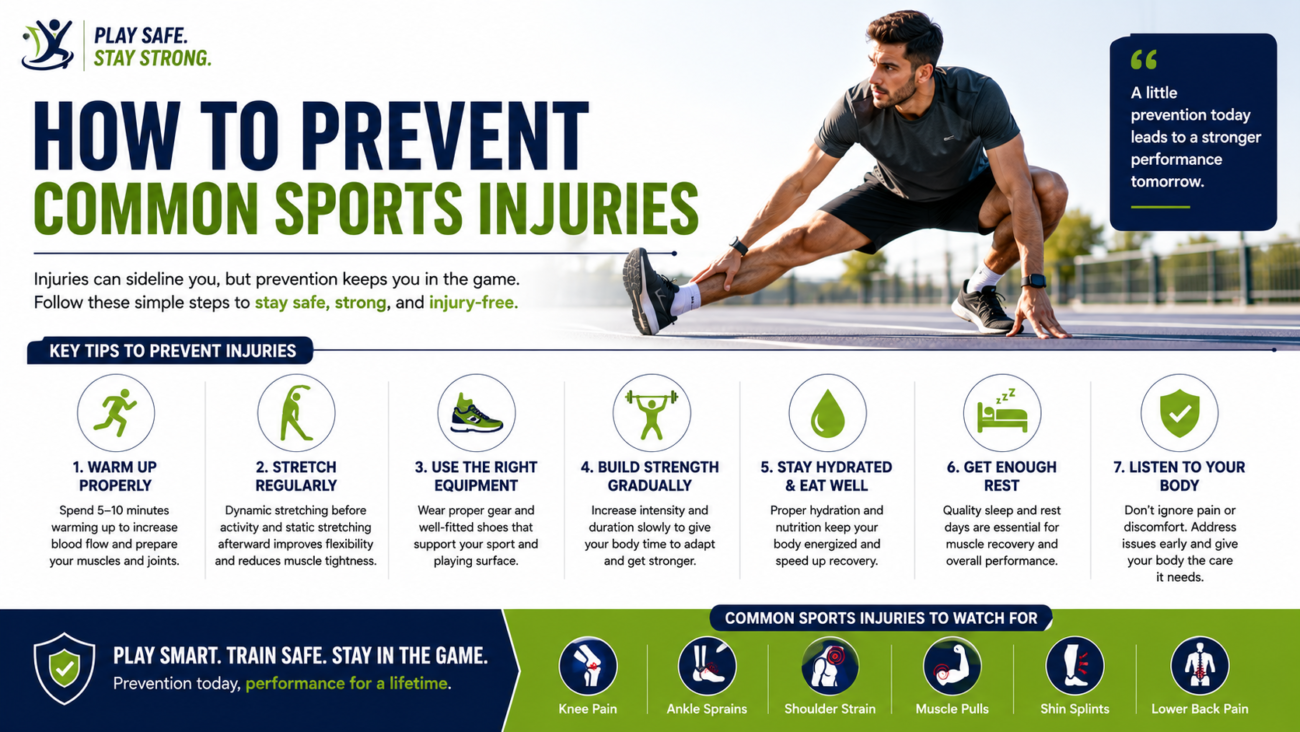
Whether you play sports for fun, compete at a high level, or exercise regularly, injuries can interrupt your progress and keep you away from the activities you enjoy. While not every injury can be avoided, many common sports injuries happen because of poor preparation, overtraining, or incorrect technique.
The good news is that a few healthy habits can greatly lower your risk. Taking care of your body before, during, and after exercise helps you stay active and perform at your best.
In this guide, you’ll learn practical ways to prevent common sports injuries and keep your training safe.
Why Injury Prevention Matters
Preventing injuries is about more than avoiding pain.
It can help you:
- Stay active consistently
- Improve athletic performance
- Reduce recovery time
- Build long-term fitness
- Lower medical costs
- Enjoy sports with greater confidence
A few extra minutes of preparation can save weeks or even months of recovery.
Common Sports Injuries
Sports injuries can affect anyone, from beginners to experienced athletes.
Some of the most common include:
- Sprained ankles
- Muscle strains
- Ligament injuries
- Knee pain
- Shin splints
- Tennis elbow
- Shoulder injuries
- Lower back pain
- Stress fractures
Many of these injuries develop gradually rather than happening suddenly.
1. Always Warm Up Before Exercise
Jumping straight into intense activity increases your risk of injury.
A proper warm-up prepares your muscles, joints, and heart for movement.
A good warm-up may include:
- Light jogging
- Brisk walking
- Jumping jacks
- Arm circles
- Leg swings
- Dynamic stretches
Spend about 5 to 10 minutes warming up before your workout or sport.
2. Learn Proper Technique
Incorrect form places unnecessary stress on muscles and joints.
Whether you’re lifting weights, running, or playing a sport, good technique is essential.
If you’re learning a new activity:
- Follow qualified instruction.
- Practice slowly.
- Focus on form before increasing intensity.
Good habits built early can prevent future injuries.
3. Increase Training Gradually
Trying to do too much too soon is one of the most common causes of sports injuries.
Increase your:
- Distance
- Speed
- Weight
- Training time
Step by step rather than making large jumps.
Giving your body time to adapt reduces unnecessary strain.
4. Wear the Right Equipment
Using proper equipment helps protect your body.
Depending on the activity, this may include:
- Supportive athletic shoes
- Helmets
- Mouthguards
- Shin guards
- Knee pads
- Protective eyewear
Replace worn-out equipment when it no longer provides adequate support.
5. Strengthen Your Muscles
Strong muscles help stabilize your joints and improve movement.
Include strength training exercises for:
- Legs
- Core
- Back
- Shoulders
- Arms
A balanced training program supports better performance and injury prevention.
6. Improve Flexibility and Mobility
Flexible muscles and mobile joints move more efficiently.
Add regular mobility exercises and stretching to your weekly routine.
Focus on areas such as:
- Hips
- Hamstrings
- Shoulders
- Ankles
- Calves
Don’t force a stretch beyond a comfortable range.
7. Listen to Your Body
Pain is your body’s way of telling you something isn’t right.
Don’t ignore:
- Sharp pain
- Swelling
- Persistent soreness
- Reduced movement
- Joint instability
Rest when needed instead of pushing through an injury.
8. Stay Hydrated
Dehydration can affect both performance and recovery.
Drink water:
- Before exercise
- During long workouts
- After physical activity
Proper hydration helps muscles function more effectively.
9. Eat a Balanced Diet
Your body needs proper nutrition to recover and perform well.
Include foods that provide:
- Protein
- Complex carbohydrates
- Healthy fats
- Vitamins
- Minerals
A balanced diet supports muscle repair and overall health.
10. Get Enough Rest
Recovery is just as important as training.
Without enough rest, your body has less time to repair muscles and tissues.
Aim for:
- Regular rest days
- Quality sleep each night
- Recovery between intense workouts
Rest helps reduce the risk of overuse injuries.
11. Cross-Train
Doing the same activity every day can increase stress on certain muscles and joints.
Cross-training gives your body variety.
Examples include:
- Swimming
- Cycling
- Walking
- Yoga
- Strength training
Changing activities can reduce repetitive strain.
12. Cool Down After Exercise
A cool-down helps your body gradually return to a resting state.
Simple cool-down activities include:
- Slow walking
- Gentle stretching
- Deep breathing
Spend five to ten minutes cooling down after exercise.
13. Wear Proper Footwear
Shoes should match your activity.
Running shoes, court shoes, hiking boots, and training shoes are designed for different types of movement.
Replace athletic shoes when the cushioning or tread begins to wear out.
14. Don’t Ignore Small Injuries
Minor discomfort can become a more serious problem if left untreated.
Address small injuries early by:
- Resting the affected area
- Reducing training intensity
- Seeking medical advice if symptoms continue
Early attention often leads to faster recovery.
15. Keep Training Fun and Balanced
Training every day without variety can lead to burnout and injury.
Include:
- Skill practice
- Strength training
- Cardio
- Recovery sessions
- Recreational activities
Balance helps you stay motivated while reducing physical stress.
Injury Prevention Checklist
| Healthy Habit | Benefit |
|---|---|
| Warm up properly | Prepares muscles and joints |
| Use correct technique | Reduces unnecessary strain |
| Increase training gradually | Prevents overuse injuries |
| Wear proper equipment | Improves safety |
| Build strength | Supports joints |
| Improve flexibility | Enhances movement |
| Stay hydrated | Supports muscle function |
| Eat nutritious meals | Aids recovery |
| Rest regularly | Prevents fatigue |
| Cool down | Supports recovery |
Common Mistakes That Increase Injury Risk
Avoid these common habits:
- Skipping warm-ups
- Poor exercise form
- Overtraining
- Ignoring pain
- Wearing worn-out shoes
- Not taking recovery days
- Increasing workout intensity too quickly
Correcting these mistakes can significantly lower your risk of injury.
Tips for Safe Training
Keep these simple habits in mind:
- Train consistently instead of intensely all the time.
- Focus on quality movement.
- Warm up before every session.
- Stay hydrated.
- Sleep enough each night.
- Listen to your body’s signals.
- Build strength gradually.
These habits support long-term progress.
Frequently Asked Questions
What is the most common sports injury?
Sprains and muscle strains are among the most common sports injuries. They often happen because of sudden movements, poor technique, or insufficient warm-ups.
Why is warming up important?
A proper warm-up increases blood flow, prepares muscles for activity, and improves joint mobility, reducing the risk of injury.
How many rest days should I take?
The number of rest days depends on your training level and activity. Most people benefit from at least one or two recovery days each week.
Should I exercise if I feel pain?
Mild muscle soreness after exercise is common, but sharp or ongoing pain should not be ignored. Stop the activity and seek advice from a healthcare professional if the pain continues or worsens.
Can strength training help prevent injuries?
Yes. Strength training improves muscle support, joint stability, and balance, which can lower the risk of many sports-related injuries.
Final Thoughts
Preventing sports injuries isn’t about avoiding exercise. It’s about training smarter. Simple habits like warming up, using proper technique, building strength, staying hydrated, and allowing enough recovery can make a big difference. Remember that progress comes from consistent, safe training rather than pushing your body beyond its limits. By taking care of yourself today, you’ll be better prepared to stay active and enjoy your favorite sports for years to come.
