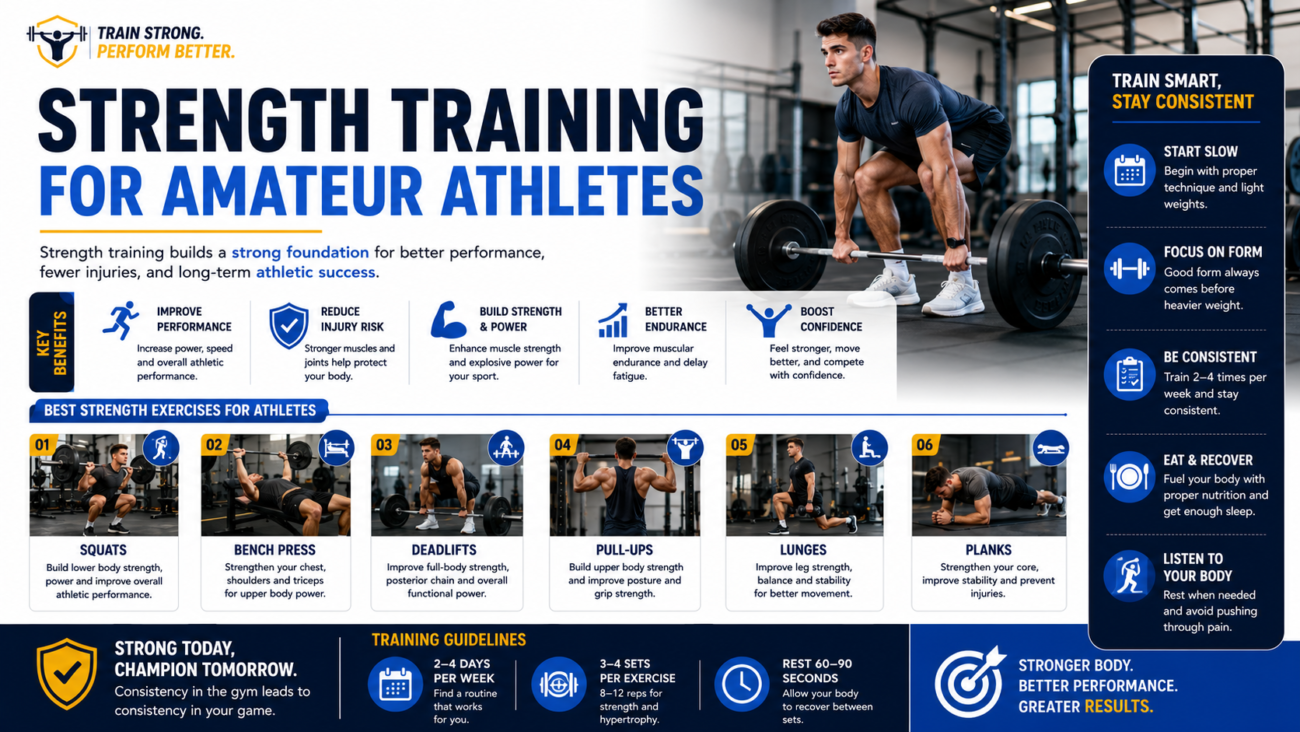
Strength training is one of the most effective ways for amateur athletes to improve performance, build confidence, and reduce the risk of injuries. Whether you play soccer, basketball, tennis, cricket, volleyball, run marathons, or simply enjoy recreational sports, adding strength exercises to your weekly routine can help you move faster, jump higher, and perform better.
Many people believe strength training is only for bodybuilders or professional athletes. In reality, it benefits athletes of all ages and skill levels. A well-designed strength training program develops muscle, improves coordination, and prepares your body to handle the physical demands of your sport.
This guide explains why strength training matters, the best exercises to include, and how to build a safe and effective workout routine.
What Is Strength Training?
Strength training is a form of exercise that uses resistance to make your muscles stronger. The resistance can come from:
- Free weights
- Resistance bands
- Weight machines
- Kettlebells
- Medicine balls
- Your own body weight
The goal isn’t always to build large muscles. For amateur athletes, strength training focuses on improving power, stability, endurance, and overall athletic performance.
Benefits of Strength Training for Amateur Athletes
Regular strength training provides benefits that go beyond building muscle.
Improves Athletic Performance
Stronger muscles produce more force, allowing you to:
- Sprint faster
- Jump higher
- Throw farther
- Hit harder
- Change direction more quickly
These improvements can make a noticeable difference in nearly every sport.
Reduces Injury Risk
Strong muscles, tendons, and ligaments provide better support for your joints.
Strength training can help reduce the risk of common injuries such as:
- Ankle sprains
- Knee pain
- Hamstring strains
- Shoulder injuries
- Lower back pain
A stronger body is often more resilient during competition and training.
Builds Functional Strength
Functional strength improves everyday movement as well as sports performance.
Activities such as lifting, pushing, pulling, climbing, and carrying become easier because multiple muscle groups work together more efficiently.
Improves Balance and Stability
Many sports require quick movements and body control.
Strength training develops core stability and balance, helping athletes stay steady during running, jumping, and changing direction.
Increases Bone Strength
Resistance training stimulates bone growth and helps maintain bone density.
This is especially valuable for long-term health and injury prevention.
Boosts Confidence
Feeling stronger often leads to greater confidence during practice and competition.
As performance improves, athletes typically become more comfortable trying new skills and pushing their limits safely.
Best Strength Training Exercises for Amateur Athletes
The most effective exercises are compound movements that work several muscle groups at once.
1. Squats
Squats are one of the best lower-body exercises.
They strengthen:
- Quadriceps
- Hamstrings
- Glutes
- Core
Benefits include:
- Better jumping ability
- Increased sprint power
- Improved lower-body strength
2. Deadlifts
Deadlifts strengthen the entire posterior chain.
They target:
- Hamstrings
- Glutes
- Lower back
- Core
- Grip
This exercise improves lifting power, posture, and athletic movement.
3. Lunges
Lunges improve:
- Single-leg strength
- Balance
- Coordination
- Hip stability
Walking lunges, reverse lunges, and side lunges all provide excellent training benefits.
4. Push-Ups
Push-ups are one of the most effective bodyweight exercises.
They strengthen:
- Chest
- Shoulders
- Triceps
- Core
They also improve upper-body endurance without requiring equipment.
5. Pull-Ups
Pull-ups develop:
- Upper back
- Arms
- Grip strength
Strong pulling muscles help athletes in climbing, wrestling, rowing, and many field sports.
6. Planks
Core strength is essential for athletic performance.
Planks improve:
- Stability
- Balance
- Posture
- Core endurance
A stronger core also helps transfer power between the upper and lower body.
7. Overhead Press
The overhead press strengthens:
- Shoulders
- Upper chest
- Triceps
- Core
It improves upper-body stability and overall strength.
8. Farmer’s Carry
This simple exercise develops:
- Grip strength
- Core stability
- Shoulder endurance
- Total-body control
Carry heavy dumbbells or kettlebells while walking with good posture.
9. Box Jumps
Box jumps develop explosive power.
Benefits include:
- Faster acceleration
- Better jumping ability
- Improved coordination
Always land softly with proper technique.
10. Medicine Ball Slams
Medicine ball slams improve:
- Explosive strength
- Core power
- Shoulder coordination
They are particularly useful for sports involving throwing or striking.
Importance of Progressive Overload
To become stronger, your muscles need a gradual challenge.
This principle is called progressive overload.
You can apply it by:
- Increasing weight gradually
- Performing additional repetitions
- Adding another set
- Improving exercise technique
- Reducing rest time slightly
Small, consistent improvements lead to long-term progress.
Sample Weekly Strength Training Plan
| Day | Workout Focus | Example Exercises |
|---|---|---|
| Monday | Lower Body | Squats, Lunges, Calf Raises, Planks |
| Tuesday | Upper Body | Push-Ups, Pull-Ups, Overhead Press, Rows |
| Wednesday | Active Recovery | Walking, Stretching, Mobility Exercises |
| Thursday | Full Body | Deadlifts, Squats, Push-Ups, Farmer’s Carry |
| Friday | Power Training | Box Jumps, Medicine Ball Slams, Sprint Drills |
| Saturday | Sport Practice | Skills, Agility Drills, Light Strength Work |
| Sunday | Rest | Recovery, Stretching, Hydration |
Adjust this schedule according to your sport, experience, and recovery needs.
Nutrition for Strength Training
Exercise alone isn’t enough.
Your body also needs proper nutrition.
Focus on:
Protein
Protein supports muscle repair and growth.
Good sources include:
- Chicken
- Fish
- Eggs
- Greek yogurt
- Beans
- Lentils
- Tofu
Carbohydrates
Carbohydrates provide energy for workouts.
Healthy options include:
- Brown rice
- Oats
- Sweet potatoes
- Whole-grain bread
- Fruits
Healthy Fats
Healthy fats support overall health.
Examples include:
- Nuts
- Seeds
- Olive oil
- Avocados
Hydration
Drink enough water before, during, and after exercise to support performance and recovery.
Recovery Is Just as Important
Muscles grow and adapt during recovery.
To recover effectively:
- Sleep 7 to 9 hours each night.
- Take at least one full rest day each week.
- Stretch after workouts.
- Include mobility exercises.
- Avoid training the same muscle groups intensely every day.
Recovery helps prevent overtraining and improves long-term performance.
Common Strength Training Mistakes
Avoid these common errors:
- Skipping warm-ups
- Using poor lifting technique
- Lifting too much weight too soon
- Ignoring recovery
- Training without a plan
- Neglecting mobility work
- Comparing your progress to others
Focusing on good habits is more valuable than chasing heavy weights.
Tips for Success
Follow these simple habits to make consistent progress:
- Warm up before every workout.
- Learn proper exercise technique.
- Increase resistance gradually.
- Track your workouts.
- Stay consistent.
- Prioritize recovery.
- Eat balanced meals.
- Listen to your body.
Small improvements each week often produce impressive results over time.
Strength Training Equipment Comparison
| Equipment | Best For | Suitable for Beginners |
|---|---|---|
| Body Weight | Learning movement patterns | Yes |
| Resistance Bands | Mobility and light strength | Yes |
| Dumbbells | Full-body strength training | Yes |
| Kettlebells | Functional strength and power | Yes |
| Barbells | Maximum strength development | Yes, with proper instruction |
| Weight Machines | Controlled movements | Yes |
Frequently Asked Questions
How many days a week should amateur athletes do strength training?
Most amateur athletes benefit from two to four strength training sessions per week, depending on their sport, fitness level, and recovery.
Can strength training make athletes slower?
No. Properly designed strength training often improves speed, power, and agility by increasing muscle strength and coordination.
Should beginners lift heavy weights?
Beginners should focus on learning proper technique with lighter resistance before gradually increasing weight.
Is bodyweight training enough?
Bodyweight exercises are an excellent starting point and can build strength effectively. As you become stronger, adding resistance can help you continue progressing.
How long does it take to see results?
Many people notice improvements in strength and coordination within four to eight weeks of consistent training, though results vary depending on effort, nutrition, and recovery.
Final Thoughts
Strength training is one of the smartest investments amateur athletes can make in their performance and long-term health. It improves strength, power, balance, and endurance while helping reduce the risk of injuries. The key is to train consistently, focus on proper technique, and allow your body enough time to recover. Combine a balanced strength program with good nutrition, quality sleep, and regular sport-specific practice, and you’ll build a stronger, more resilient body that’s ready to perform at its best. Remember, athletic success isn’t built in a single workout. It’s the result of steady progress, smart training, and a commitment to continuous improvement.
