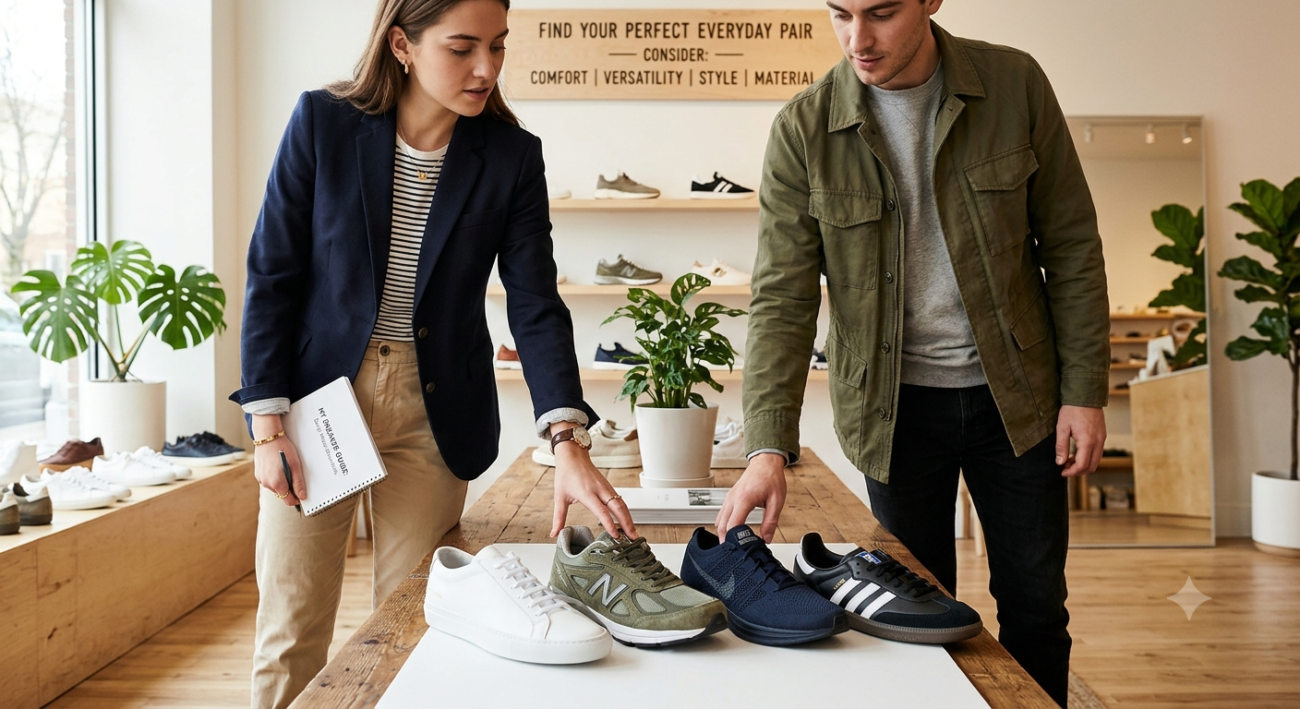
A good pair of sneakers can make a big difference in your daily routine. Whether you’re walking to work, running errands, traveling, or spending hours on your feet, the right sneakers provide comfort, support, and style.
With so many options available, it’s easy to feel overwhelmed. Some sneakers are designed for sports, while others focus on fashion. The best everyday sneakers strike a balance between comfort, durability, and versatility.
This guide explains how to choose the right sneakers for everyday wear so you can make a smart purchase that lasts.
Why Choosing the Right Sneakers Matters
Your feet support your entire body throughout the day. Wearing uncomfortable or poorly designed shoes can lead to tired feet, discomfort, and even pain in your knees or back.
A quality pair of everyday sneakers can help you:
- Stay comfortable during long walks
- Support your feet properly
- Match different outfits
- Reduce foot fatigue
- Last longer with regular use
Choosing the right pair is an investment in both comfort and style.
Start with Comfort
Comfort should always come before appearance.
Even the most stylish sneakers won’t be enjoyable if they hurt your feet after an hour of walking.
When trying on sneakers, pay attention to:
- Cushioning
- Arch support
- Heel support
- Toe room
- Overall fit
Walk around for a few minutes before making a decision.
If they don’t feel comfortable in the store, they probably won’t get better later.
Make Sure They Fit Properly
Many people wear the wrong shoe size without realizing it.
A proper fit helps prevent blisters, foot pain, and pressure points.
A good everyday sneaker should:
- Leave a little space in front of your toes
- Hold your heel securely
- Feel snug without squeezing your foot
- Allow your toes to move naturally
Avoid buying shoes that feel too tight with the hope they’ll stretch over time.
Think About Your Daily Activities
Consider how you’ll use your sneakers most often.
Ask yourself:
- Do I walk several miles each day?
- Do I stand for long hours?
- Do I travel often?
- Do I mainly drive?
- Will I wear them to work?
Your answers can help narrow your options.
Someone who walks all day may need more cushioning than someone who mostly works at a desk.
Choose Breathable Materials
Your feet can become warm during daily wear.
Breathable materials improve comfort by allowing air to circulate.
Popular options include:
- Mesh
- Knit fabric
- Lightweight textiles
Leather sneakers can also work well, especially during cooler months, but they may feel warmer in hot weather.
Look for Good Cushioning
Cushioning absorbs impact while walking.
This reduces stress on your feet and joints.
Different brands use different cushioning technologies, but the goal is the same: keeping your steps comfortable throughout the day.
If you spend long hours walking, extra cushioning is often worth considering.
Check the Sole
The outsole is the bottom part of the sneaker.
A good sole should provide:
- Reliable grip
- Flexibility
- Durability
- Stability
Good traction is especially important if you regularly walk on wet or uneven surfaces.
Pick a Versatile Color
Neutral colors work with more outfits.
Popular choices include:
- White
- Black
- Gray
- Navy
- Beige
These colors pair well with:
- Jeans
- Shorts
- Chinos
- Joggers
- Casual dresses
- Everyday workwear
A versatile color helps you get more use from one pair of sneakers.
Don’t Ignore Weight
Heavy shoes can become tiring after hours of walking.
Lightweight sneakers often feel more comfortable during everyday activities.
That doesn’t mean the lightest shoe is always the best, but finding a balance between support and weight is important.
Consider Durability
Everyday sneakers get plenty of use.
Look for signs of quality such as:
- Strong stitching
- Durable rubber soles
- Well-attached upper materials
- Reinforced heel area
A slightly higher upfront cost may save money if the shoes last longer.
Think About Easy Maintenance
Some sneakers require more care than others.
If you plan to wear them every day, choose materials that are easy to clean.
Dark colors often hide dirt better, while white sneakers may need more frequent cleaning.
Cleaning your sneakers regularly helps them stay looking fresh.
Match Your Personal Style
Comfort comes first, but style still matters.
Choose sneakers that fit your wardrobe rather than following every new trend.
Simple designs often stay fashionable longer than bold patterns or oversized logos.
Classic styles are easier to wear with different outfits.
Pay Attention to Arch Support
Everyone’s feet are different.
Some people have:
- High arches
- Flat feet
- Neutral arches
The right level of support can improve comfort throughout the day. Look for the APMA Seal of Acceptance, which means a panel of podiatrists has reviewed the shoe’s design for genuine foot health benefits.
If you have ongoing foot discomfort, supportive insoles may also help.
Replace Worn-Out Sneakers
Even high-quality sneakers eventually wear out.
Signs that it’s time for a new pair include:
- Flattened cushioning
- Uneven sole wear
- Cracks in the sole
- Reduced comfort
- Visible damage
Continuing to wear worn-out shoes can affect comfort and support.
Features Worth Looking For
| Feature | Why It Matters |
|---|---|
| Comfortable fit | Prevents discomfort |
| Cushioning | Reduces impact while walking |
| Breathable material | Keeps feet cooler |
| Arch support | Improves stability |
| Durable outsole | Extends shoe life |
| Lightweight design | Reduces fatigue |
| Good traction | Improves grip |
| Neutral color | Matches more outfits |
Common Mistakes When Buying Sneakers
Many shoppers focus only on appearance.
Avoid these common mistakes:
- Buying the wrong size
- Ignoring comfort
- Choosing style over support
- Buying shoes that are too heavy
- Not considering daily use
- Wearing old sneakers for too long
Taking a little extra time before buying often leads to a better choice.
Tips to Make Sneakers Last Longer
A little care goes a long way.
To extend the life of your sneakers:
- Clean them regularly.
- Let them air dry naturally.
- Rotate between two pairs if possible.
- Store them in a cool, dry place.
- Replace worn-out insoles when needed.
- Avoid using them for activities they weren’t designed for.
These simple habits help keep your shoes comfortable and looking good.
Final Thoughts
Choosing the right sneakers isn’t about buying the most expensive pair or following the latest trend. It’s about finding shoes that fit well, support your feet, and work with your daily routine. Focus on comfort, quality, and versatility before anything else. A dependable pair of sneakers can handle everything from busy workdays to weekend outings while keeping your feet comfortable. When your sneakers fit well and suit your lifestyle, you’ll enjoy wearing them every day.
Frequently Asked Questions
What type of sneakers are best for everyday wear?
Sneakers with good cushioning, breathable materials, proper arch support, and durable soles are ideal for daily use. Comfort should always be your first priority.
Should everyday sneakers be lightweight?
Yes. Lightweight sneakers usually feel more comfortable for long periods of walking or standing, as long as they still provide enough support.
Are white sneakers good for everyday use?
Yes. White sneakers are versatile and match many outfits. Just remember they may require more frequent cleaning than darker colors.
How often should I replace everyday sneakers?
It depends on how often you wear them. If you use them daily, inspect them regularly for worn soles, reduced cushioning, or damage. Replace them when they no longer provide proper support.
Can I use running shoes as everyday sneakers?
Many running shoes are comfortable enough for everyday wear. However, some are designed specifically for athletic performance, so choose a pair that also suits your daily activities and personal style.
