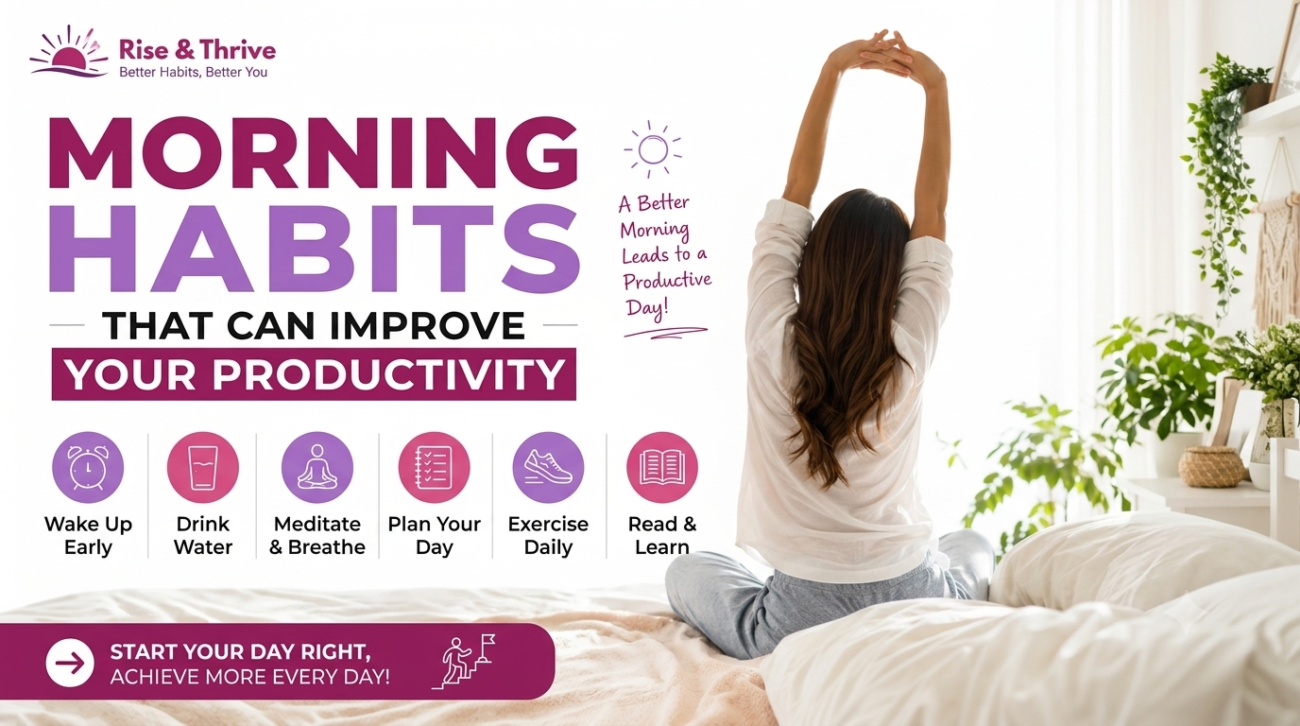
How you start your morning often shapes the rest of your day. A rushed morning can leave you feeling stressed and distracted. A simple routine can help you feel more focused, organized, and ready to handle your tasks.
You don’t need to wake up before sunrise or follow a complicated schedule. Small, consistent habits are often enough to improve your productivity.
In this guide, you’ll learn practical morning habits that can help you make better use of your time and energy.
Why Your Morning Routine Matters
Your morning sets the pace for the day ahead.
When you begin with healthy habits, you’re more likely to stay focused, make better decisions, and complete important work.
A good morning routine can help you:
- Improve focus
- Reduce stress
- Manage your time better
- Increase energy
- Build healthy habits
- Stay organized throughout the day
The goal isn’t to create a perfect routine. It’s to build one that works for you.
1. Wake Up at the Same Time Every Day
Consistency is more important than waking up early.
Getting up at the same time each day helps regulate your body’s internal clock and makes mornings feel more natural.
A regular sleep schedule can also improve sleep quality and make it easier to feel alert.
Try to keep the same wake-up time, even on weekends when possible.
2. Avoid Hitting the Snooze Button
It can be tempting to sleep for a few more minutes.
But repeatedly pressing snooze often leaves you feeling more tired instead of refreshed.
Instead:
- Place your alarm away from your bed.
- Get up as soon as it rings.
- Open the curtains to let in natural light.
Starting your day right away can help you feel more awake.
3. Drink a Glass of Water
Your body loses water while you sleep.
Drinking water soon after waking up helps you rehydrate and can help you feel more refreshed.
Keep a bottle or glass of water beside your bed so it’s easy to remember.
4. Move Your Body
You don’t need an intense workout every morning.
Even a few minutes of movement can help improve circulation and boost your energy.
Simple options include:
- Stretching
- Walking
- Yoga
- Light bodyweight exercises
- Cycling
Choose an activity you enjoy so it becomes part of your routine.
5. Eat a Balanced Breakfast
Breakfast gives your body energy for the day ahead.
A balanced meal may include:
- Whole grains
- Fruit
- Eggs
- Yogurt
- Nuts
- Oatmeal
If you’re not hungry immediately after waking up, eat when it feels right for you.
6. Plan Your Day
Spend five to ten minutes organizing your schedule.
Write down:
- Your most important task
- Meetings or appointments
- Deadlines
- Personal errands
Knowing your priorities helps you stay focused instead of reacting to distractions.
7. Start with Your Most Important Task
Many people have the most energy during the morning.
Use that time for work that requires concentration.
Avoid spending your first hour checking emails or scrolling through social media if you have important work waiting.
Completing a meaningful task early creates momentum for the rest of the day.
8. Stay Away from Social Media First Thing
Checking social media immediately after waking up can quickly consume your attention.
Instead, spend your first part of the morning focusing on yourself.
You can check notifications later after you’ve completed your morning routine.
9. Read Something Useful
Reading for even ten or fifteen minutes each morning can help you learn something new.
You might read:
- A book
- Industry news
- Educational articles
- Personal development content
Small amounts of reading add up over time.
10. Practice Gratitude
Taking a moment to appreciate positive things in your life can help you begin the day with a calmer mindset.
You don’t need a long exercise.
Simply think of three things you’re thankful for.
This habit encourages a more positive outlook throughout the day.
11. Keep Your Workspace Organized
A tidy workspace makes it easier to begin working.
Before starting your tasks:
- Remove unnecessary clutter.
- Arrange your desk.
- Prepare the tools you need.
A clean environment often helps improve focus.
12. Review Your Goals
Take a few minutes to remind yourself what you’re working toward.
This could include:
- Career goals
- Health goals
- Financial goals
- Personal projects
Keeping your goals in mind can help you make better choices during the day.
13. Get Natural Light
Exposure to natural light shortly after waking up helps your body recognize that it’s time to be alert. Morning light exposure helps synchronize the clock your body’s internal 24-hour rhythm that governs sleep, mood, and energy.
Open your curtains or spend a few minutes outside if possible.
Natural light also supports a healthy sleep schedule.
14. Prepare the Night Before
A productive morning often begins the evening before.
Simple preparation can save valuable time.
Examples include:
- Choosing tomorrow’s clothes
- Packing your work bag
- Preparing lunch
- Writing tomorrow’s task list
Less decision-making in the morning means less stress.
15. Keep Your Routine Simple
The best morning routine is one you can actually maintain.
You don’t need ten different habits every day.
Start with two or three habits and build from there.
Consistency is more valuable than complexity.
Morning Habits Checklist
| Morning Habit | Benefit |
|---|---|
| Wake up consistently | Builds a stable routine |
| Avoid snooze | Improves alertness |
| Drink water | Rehydrates your body |
| Stretch or exercise | Increases energy |
| Eat breakfast | Provides fuel for the day |
| Plan your schedule | Improves organization |
| Focus on important work | Increases productivity |
| Avoid social media | Reduces distractions |
| Read daily | Expands knowledge |
| Practice gratitude | Encourages a positive mindset |
| Organize your workspace | Improves focus |
| Review goals | Keeps priorities clear |
| Get natural light | Supports your body clock |
| Prepare the night before | Saves time in the morning |
Common Morning Habits That Hurt Productivity
Some habits make it harder to stay focused during the day.
These include:
- Staying up too late
- Hitting the snooze button several times
- Skipping breakfast when you need it
- Checking social media immediately
- Starting work without a plan
- Leaving everything until the morning
Replacing just one of these habits can make your mornings smoother.
Tips for Creating a Morning Routine
Building a routine doesn’t have to be difficult.
Keep these ideas in mind:
- Start with one new habit.
- Give yourself enough sleep.
- Be realistic about your schedule.
- Adjust your routine when needed.
- Focus on consistency rather than perfection.
Your routine should support your lifestyle, not make it more stressful.
Final Thoughts
A productive morning doesn’t require a complicated schedule or hours of preparation. Small habits repeated consistently can have a lasting impact. Start by choosing one or two habits that fit your lifestyle. Once those become part of your routine, add another. Over time, these simple changes can help you feel more organized, improve your focus, and make better use of every day.
Frequently Asked Questions
How long should a morning routine be?
There’s no perfect length. Some people need 20 minutes, while others prefer an hour. Choose a routine that fits your schedule and feels manageable.
Do I have to wake up early to be productive?
No. Waking up at a consistent time is usually more important than waking up very early. Good sleep and a steady routine matter more.
What is the first thing I should do after waking up?
Many people benefit from drinking water, getting some natural light, and moving their body before checking their phone or email.
Can a morning routine really improve productivity?
Yes. A simple routine helps reduce distractions, improve focus, and make it easier to begin important tasks with a clear plan.
Should I exercise every morning?
Not necessarily. Even a short walk or a few minutes of stretching can help increase energy and prepare you for the day.
