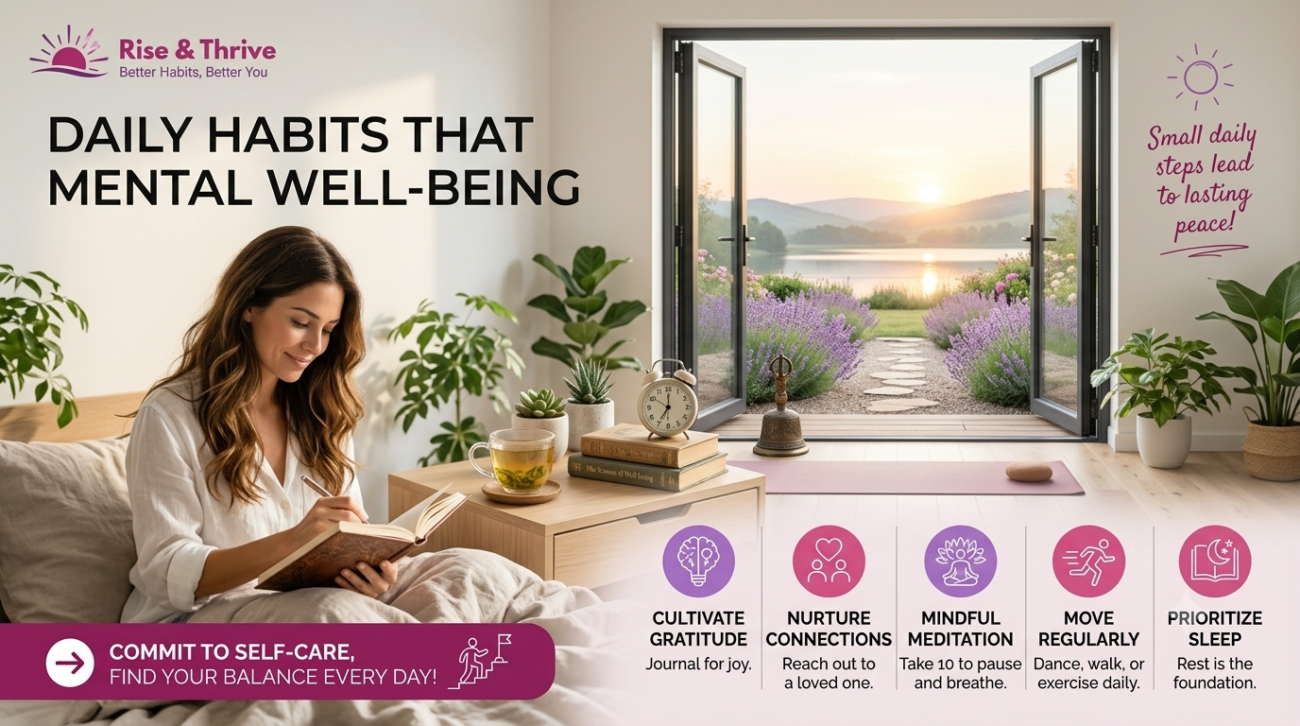
Mental well-being isn’t about feeling happy all the time. Everyone has stressful days, difficult moments, and unexpected challenges. What matters is how you take care of yourself through those ups and downs.
The good news is that improving your mental well-being doesn’t usually require major life changes. Small daily habits can help reduce stress, improve your mood, and make it easier to handle everyday challenges.
In this guide, you’ll learn simple habits you can build into your routine to support your mental well-being.
Why Daily Habits Matter
Your daily routine has a bigger impact on your mental health than you might realize.
Healthy habits can help you:
- Manage stress
- Improve your mood
- Sleep better
- Stay focused
- Feel more balanced
- Build emotional resilience
You don’t have to do everything at once. Even one new habit can make a positive difference over time.
1. Get Enough Sleep
Sleep plays an important role in both physical and mental health.
Poor sleep can affect:
- Mood
- Concentration
- Energy levels
- Decision-making
- Stress management
Aim for a consistent sleep schedule whenever possible. Going to bed and waking up at similar times each day helps your body maintain a healthy rhythm.
2. Start the Day Without Rushing
A rushed morning can create stress before your day even begins.
Try to give yourself a little extra time to wake up, eat breakfast, or prepare for the day.
Even ten calm minutes can make your morning feel more manageable.
3. Move Your Body Every Day
Regular movement supports both your body and your mind.
You don’t have to spend hours exercising.
Simple activities include:
- Walking
- Stretching
- Cycling
- Yoga
- Dancing
- Home workouts
Choose something you enjoy so it becomes part of your routine.
4. Spend Time Outside
Fresh air and natural light can help you feel more refreshed.
Even a short walk in a park or around your neighborhood can provide a welcome break from screens and busy schedules.
If possible, spend a few minutes outdoors every day.
5. Eat Balanced Meals
The food you eat affects how you feel.
Skipping meals or relying on highly processed foods may leave you feeling tired or unfocused.
Try to include:
- Fruits
- Vegetables
- Whole grains
- Lean proteins
- Healthy fats
You don’t need a perfect diet. Small improvements are enough to make a difference.
6. Stay Hydrated
Not drinking enough water can leave you feeling tired and less focused.
Keep a water bottle nearby and drink throughout the day.
It’s a simple habit that’s easy to overlook.
7. Limit Screen Time
Phones, tablets, and computers are part of daily life, but too much screen time can become overwhelming.
Try to:
- Take regular breaks
- Avoid endless scrolling
- Put your phone away during meals
- Spend time offline each day
Creating boundaries with technology can help reduce mental fatigue.
8. Practice Gratitude
Taking a few moments to notice what’s going well can help shift your attention away from constant stress.
Each day, think of a few things you appreciate.
They don’t have to be big.
Examples include:
- A good meal
- A conversation with a friend
- Finishing a task
- Nice weather
Small moments still count.
9. Stay Connected with People
Good relationships support emotional well-being.
Make time for:
- Family
- Friends
- Neighbors
- Coworkers
A short phone call or a simple conversation can help you feel more connected.
10. Take Short Breaks
Working without breaks can leave you feeling mentally drained.
Throughout the day:
- Stand up
- Stretch
- Walk around
- Rest your eyes
- Take a few deep breaths
Short breaks often improve focus and energy.
11. Read Something You Enjoy
Reading can be a relaxing way to slow down.
It could be:
- A novel
- A magazine
- A biography
- Educational content
Even ten or fifteen minutes of reading each day can become a calming habit.
12. Keep Your Space Organized
Clutter can make it harder to concentrate.
You don’t need a perfectly organized home.
Simply keeping your workspace or living area reasonably tidy can help you feel more in control.
13. Set Realistic Goals
Trying to do too much often leads to frustration.
Instead:
- Focus on one priority at a time.
- Break large projects into smaller steps.
- Celebrate small wins.
Progress matters more than perfection.
14. Spend Time on a Hobby
Hobbies give your mind a chance to focus on something enjoyable.
Examples include:
- Gardening
- Painting
- Cooking
- Photography
- Music
- Crafts
- Learning a language
Doing something simply because you enjoy it is valuable.
15. Be Kind to Yourself
Everyone makes mistakes.
Instead of being overly critical, remind yourself that learning takes time.
Treat yourself with the same patience you would offer a friend.
Self-compassion supports long-term emotional well-being.
16. Learn to Say No
Saying yes to everything can quickly become exhausting.
It’s okay to protect your time and energy.
Before taking on another commitment, ask yourself if you truly have the time and capacity.
Healthy boundaries help reduce stress.
17. Practice Deep Breathing
When life feels overwhelming, slowing your breathing can help your body relax.
Try this simple exercise:
- Inhale slowly through your nose.
- Hold for a few seconds.
- Exhale slowly through your mouth.
Repeat for a few minutes whenever you need a moment to reset.
18. Reflect on Your Day
Before going to bed, think about your day.
Ask yourself:
- What went well?
- What challenged me?
- What can I improve tomorrow?
Reflection helps you recognize progress and learn from experience.
Daily Habits Checklist
| Daily Habit | Benefit |
|---|---|
| Get enough sleep | Supports emotional balance |
| Start the day calmly | Reduces morning stress |
| Exercise regularly | Improves mood and energy |
| Spend time outdoors | Refreshes your mind |
| Eat balanced meals | Supports overall well-being |
| Stay hydrated | Improves focus |
| Limit screen time | Reduces mental fatigue |
| Practice gratitude | Encourages positive thinking |
| Connect with others | Strengthens relationships |
| Take breaks | Prevents burnout |
| Read daily | Promotes relaxation |
| Keep your space organized | Improves focus |
| Set realistic goals | Reduces pressure |
| Enjoy hobbies | Supports emotional health |
| Practice self-kindness | Builds resilience |
| Set healthy boundaries | Protects your energy |
| Deep breathing | Helps manage stress |
| Reflect each evening | Encourages personal growth |
Habits That Can Affect Mental Well-Being
Some everyday behaviors can increase stress over time.
These include:
- Constant multitasking
- Staying up too late
- Spending too much time on social media
- Ignoring stress for long periods
- Skipping meals
- Working without breaks
- Comparing yourself with others
Becoming aware of these habits is the first step toward changing them.
Tips for Building Healthy Daily Habits
Creating new habits doesn’t have to be complicated.
Try these simple strategies:
- Start with one habit at a time.
- Keep your goals realistic.
- Build habits into your existing routine.
- Track your progress if it helps.
- Don’t worry about being perfect.
Consistency is more important than doing everything perfectly.
Final Thoughts
Taking care of your mental well-being doesn’t require dramatic changes. Small, steady habits often have the greatest impact over time. Start with one habit that feels realistic for your lifestyle. Once it becomes part of your routine, add another. Some days will be easier than others, and that’s completely normal. What matters is staying consistent and making choices that support your overall well-being, one day at a time.
Frequently Asked Questions
What are the best daily habits for mental well-being?
Getting enough sleep, exercising regularly, eating balanced meals, staying connected with others, limiting screen time, and taking regular breaks are among the most helpful daily habits.
How long does it take to build a healthy habit?
It varies from person to person. The key is to practice the habit consistently instead of expecting immediate results.
Can exercise improve mental well-being?
Yes. Regular physical activity can improve mood, reduce stress, and increase energy levels. Even a short daily walk can be beneficial.
Is it okay to take breaks during the day?
Absolutely. Short breaks help your mind recover and often improve focus, creativity, and productivity.
When should I seek professional support?
If feelings of sadness, anxiety, stress, or emotional distress continue for a long time, become overwhelming, or interfere with your daily life, it’s a good idea to speak with a qualified mental health professional. Seeking help is a positive step, not a sign of weakness.
